
Eastern Caribbean
Check current opening hours and entry requirements directly with the site before travelling.
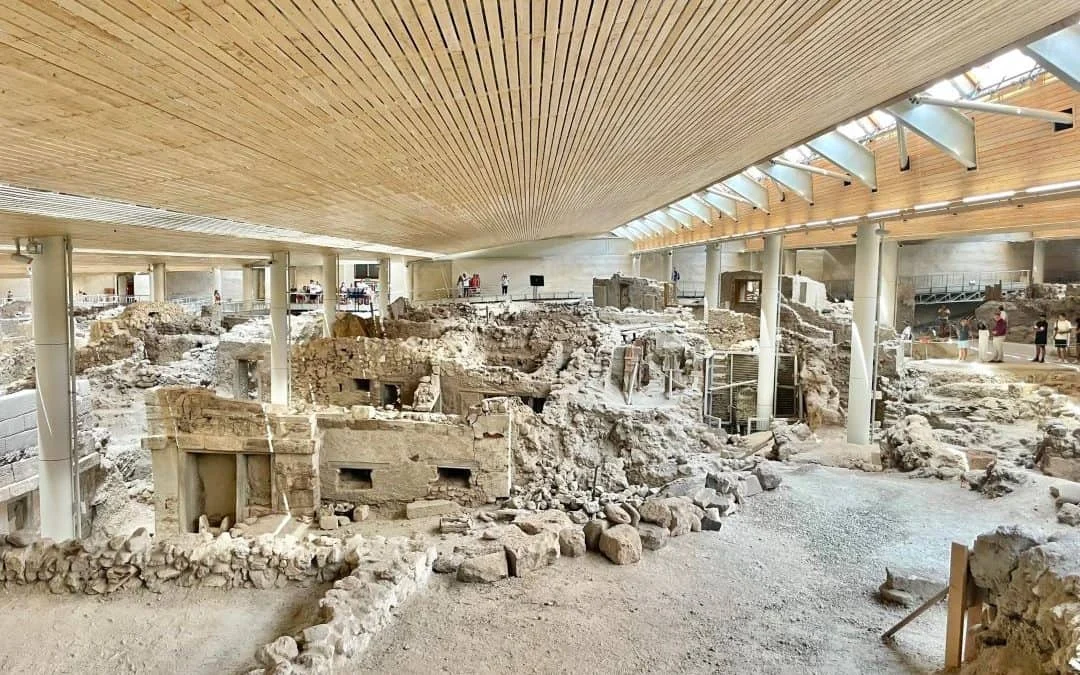
Akrotiri is a prehistoric archaeological site on Santorini, preserved beneath volcanic ash from a large eruption that buried the settlement thousands of years ago. The ruins include structural remains of ancient buildings alongside clay artefacts that survived within the ash layers.
The site is sheltered, meaning visitors can walk through excavated areas under a protective roof structure that covers the remains. This arrangement keeps the archaeology visible while shielding it from the elements.
The artefacts and ruins together give a picture of a settlement that existed before the eruption reshaped the island, making Akrotiri one of the more significant Bronze Age sites in the Aegean.
Location
Akrotiri sits at the southern tip of Santorini, an island in the southern Cyclades group of Greece.
Coordinates: 36.3583° N · 25.3972° E
Nearby places
All of Santorini Recommended
A beach club below Santorini's volcanic cliffs, with Greek food, shaded loungers and a rocky shoreline. We visited after Oia and Fira on our Celebrity Xcel excursion.
 Recommended
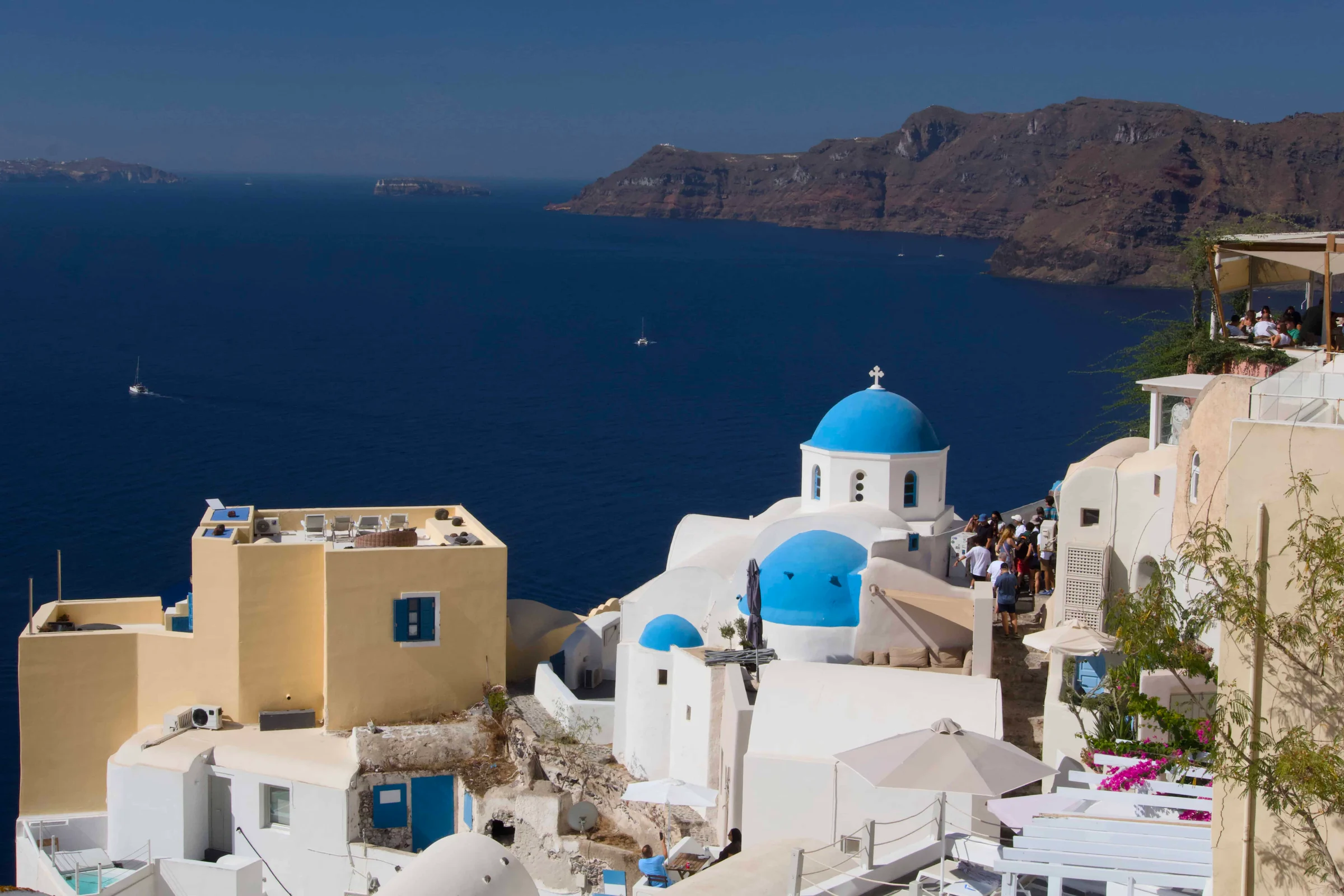
A viewpoint in Oia, Santorini, where you can photograph the famous trio of blue-domed churches above the caldera. Crowds build through the morning, so an early visit is worthwhile.
Ammoudi Bay is a small inlet below Oia on Santorini, reached by steps cut into the cliff. Seafood tavernas line the waterfront and the rocks are used for swimming.
Ancient Thera is a ruined settlement on Mesa Vouno, Santorini, with streets, temples and inscriptions from the Archaic, Hellenistic and Roman periods. It can be reached on foot from Perissa or Kamari.

A trail along the caldera rim of Santorini linking the main town of Fira with the village of Oia, passing through smaller cliffside settlements across volcanic rocky terrain.

A cliff-edge dining venue in Fira, Santorini, with views over the sea. The menu focuses on gourmet pasta and meat dishes.