Eastern Caribbean
Advance tickets are widely advised given the basilica's consistently high visitor numbers.
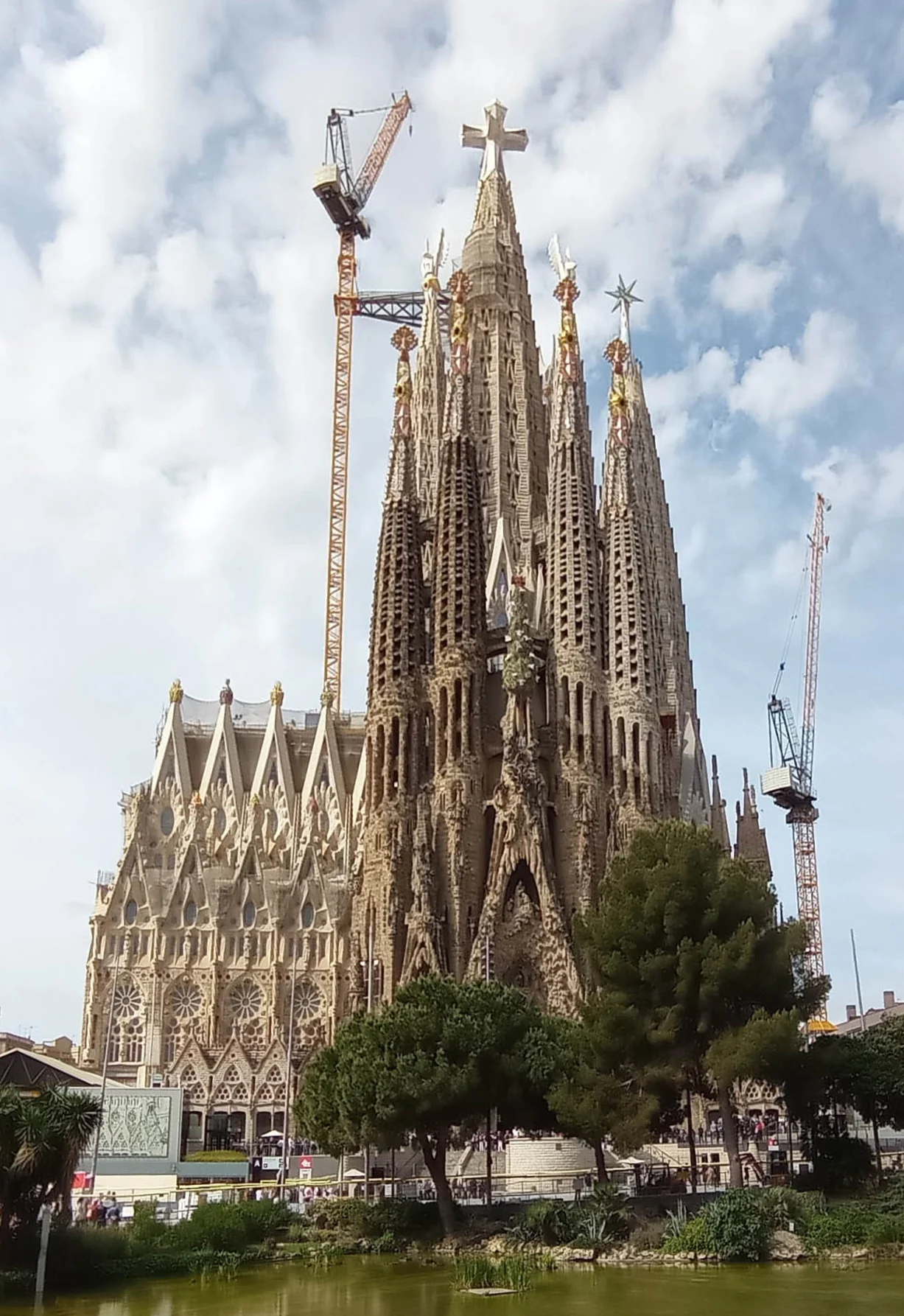
The Sagrada Família is a large Roman Catholic basilica in the Eixample district of Barcelona, designed by the Catalan architect Antoni Gaudí. Construction began in 1882 and continues to this day, making it one of the longest-running building projects in the world.
The exterior features two principal façades that differ markedly in style and symbolism. The Nativity façade, largely completed during Gaudí's lifetime, is covered in figurative sculpture depicting scenes from the birth of Christ. The Passion façade, by contrast, takes a starker, more angular approach to its biblical subject matter.
Inside, the nave is defined by branching stone columns designed to resemble a forest canopy. The stained-glass windows are arranged so that cooler blues and greens fill the western side while warmer ambers and reds dominate the east, producing shifting patterns of coloured light across the interior throughout the day.
Location
The Sagrada Família stands in the Eixample district of Barcelona, roughly at the centre of the city's grid.
Coordinates: 41.4043° N · 2.1747° E
Nearby places
All of Barcelona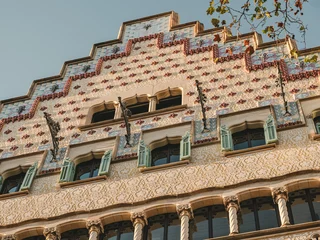
A modernist residence designed by Josep Puig i Cadafalch, featuring a stepped gable and ornate Catalan-Gothic accents.
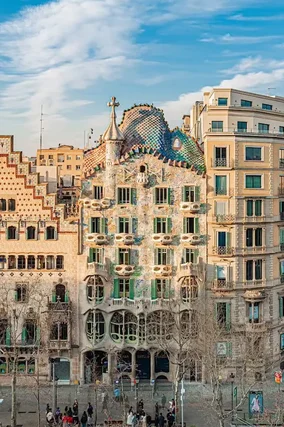
Casa Batlló is a Gaudí-designed building on Passeig de Gràcia in Barcelona, known for its skeletal facade, dragon-scale roofline and mosaic tiling. It now operates as a public museum.
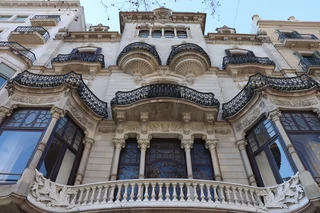
Casa Malagrida is a modernist mansion on Passeig de Gràcia, designed by Joaquim Codina i Matalí, with facade reliefs referencing Argentina and Spain.
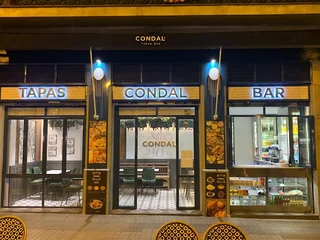
A busy tapas bar near the Sagrada Família serving classic Spanish small plates such as omelette, cheese and fried seafood.
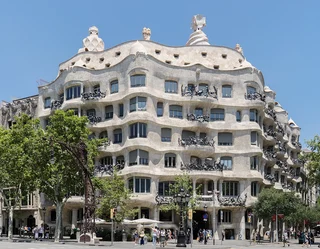
A modernist apartment building by Antoni Gaudí, known for its rough-hewn limestone façade and organic balconies.