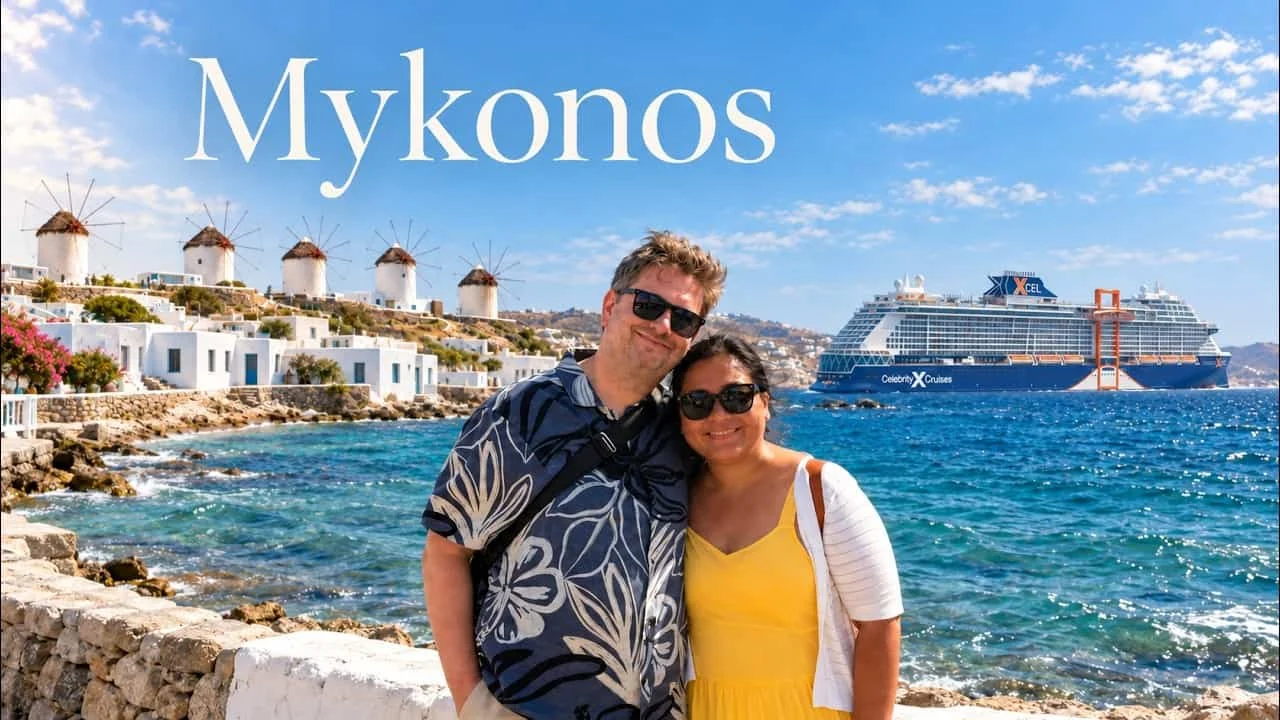

It's no secret that Mykonos is one of the top destinations in Greece. In fact, it's regarded as one of those party islands once dusk comes. But there's a side of travelling that appeals to us more than the nightlife: discovering a place's hidden corners, quiet spots, and the places where locals actually go.
When we booked our cruise and found out Mykonos was one of the port stops, we immediately looked into how we could make the most of our time on the island — seeing the must-visit spots, but also getting a feel for Mykonos through a local's eyes. Luckily, we found our tour via GetYourGuide (https://gyg.me/pb8CuTGX), and we didn't realise we were in for such a treat.
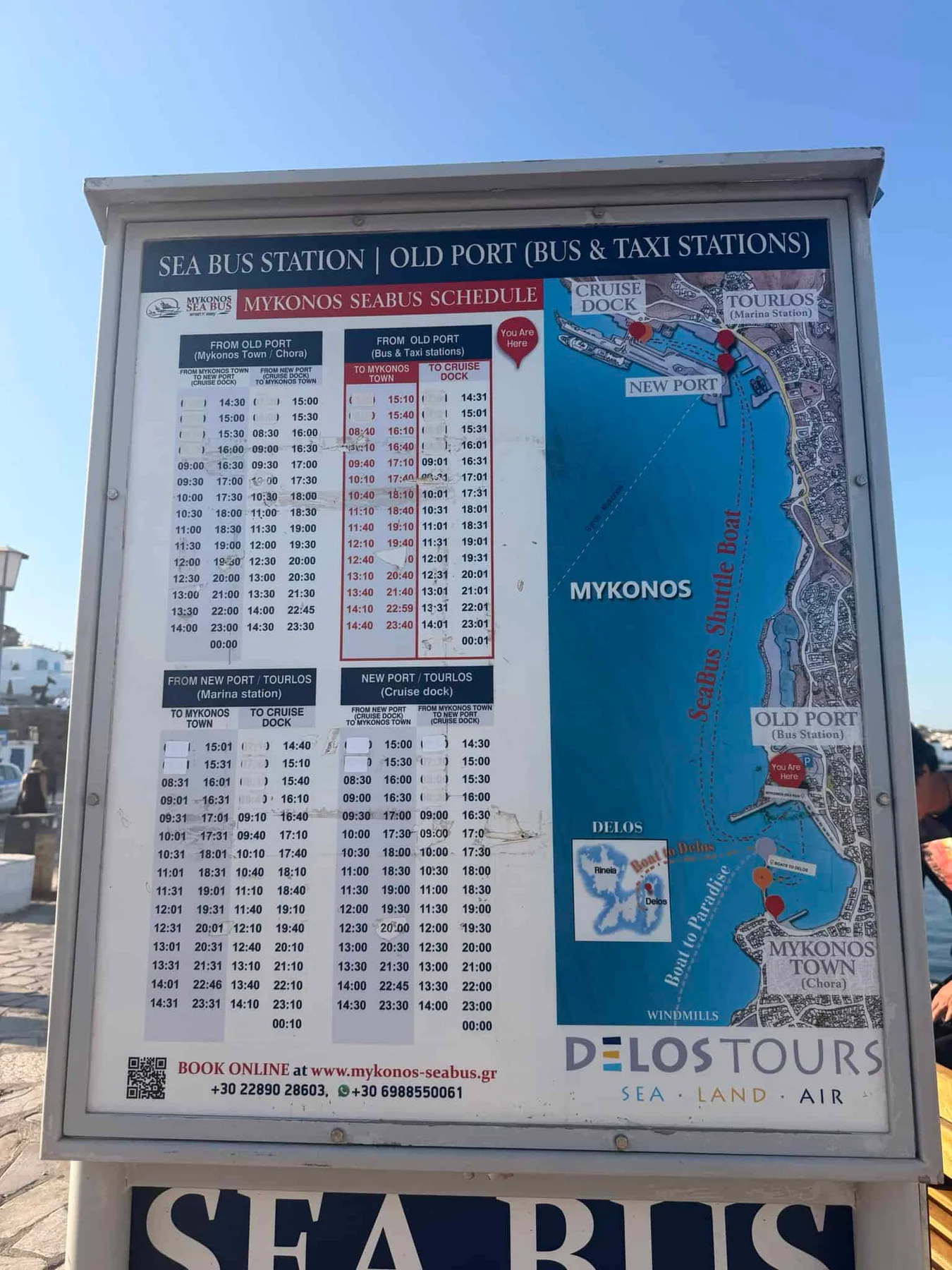
Before we get to our day in Mykonos, it's worth mentioning how we got to the old town. Mykonos has two ports: the Old Port, right in the heart of town, and the New Port, called Tourlos, about 1.2 miles (2km) from the Old Port. When we arrived, there were already cruise ships docked at the New Port, so we had to be tendered in. That took about 5 minutes. Celebrity had arranged a bus service that took us the 10 minutes or so from the tender pier into the old town. If you're going it alone from the New Port to the Old Port, there are local buses and sea buses — worth checking the current timetable before you go, as schedules shift seasonally.
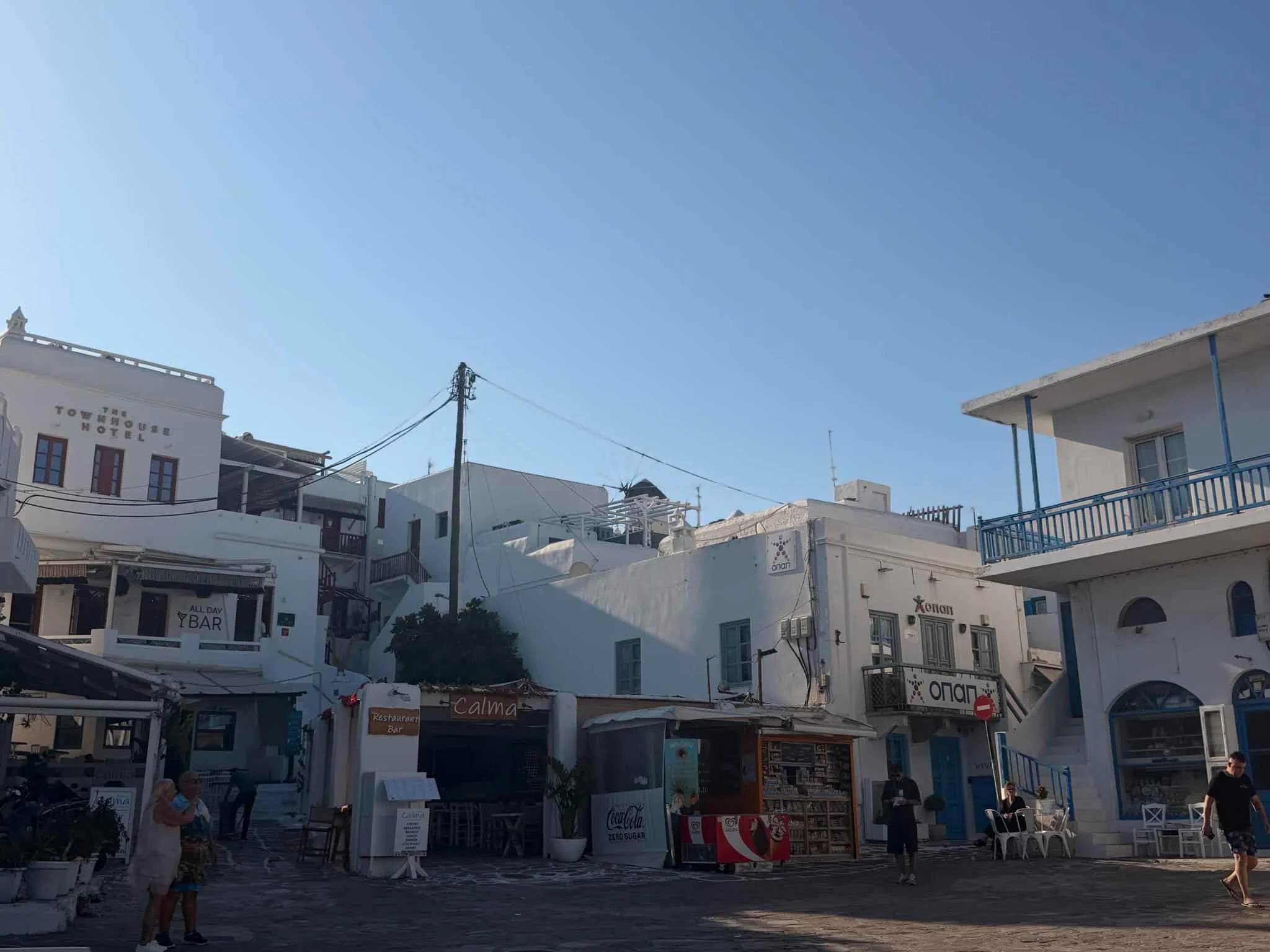
As soon as we reached the heart of town, we had a few minutes to spare before our tour started, so we made our way to the meeting point at Manto Square — according to our guide, the easiest landmark to remember in the old town.
The square honours Manto Mavrogenous, a brave 19th-century heroine who used her family's wealth to fund Greek ships and fight the Ottoman Empire during the Greek War of Independence. A central marble bust of Manto Mavrogenous stands in the middle of the square as a tribute to her legacy.
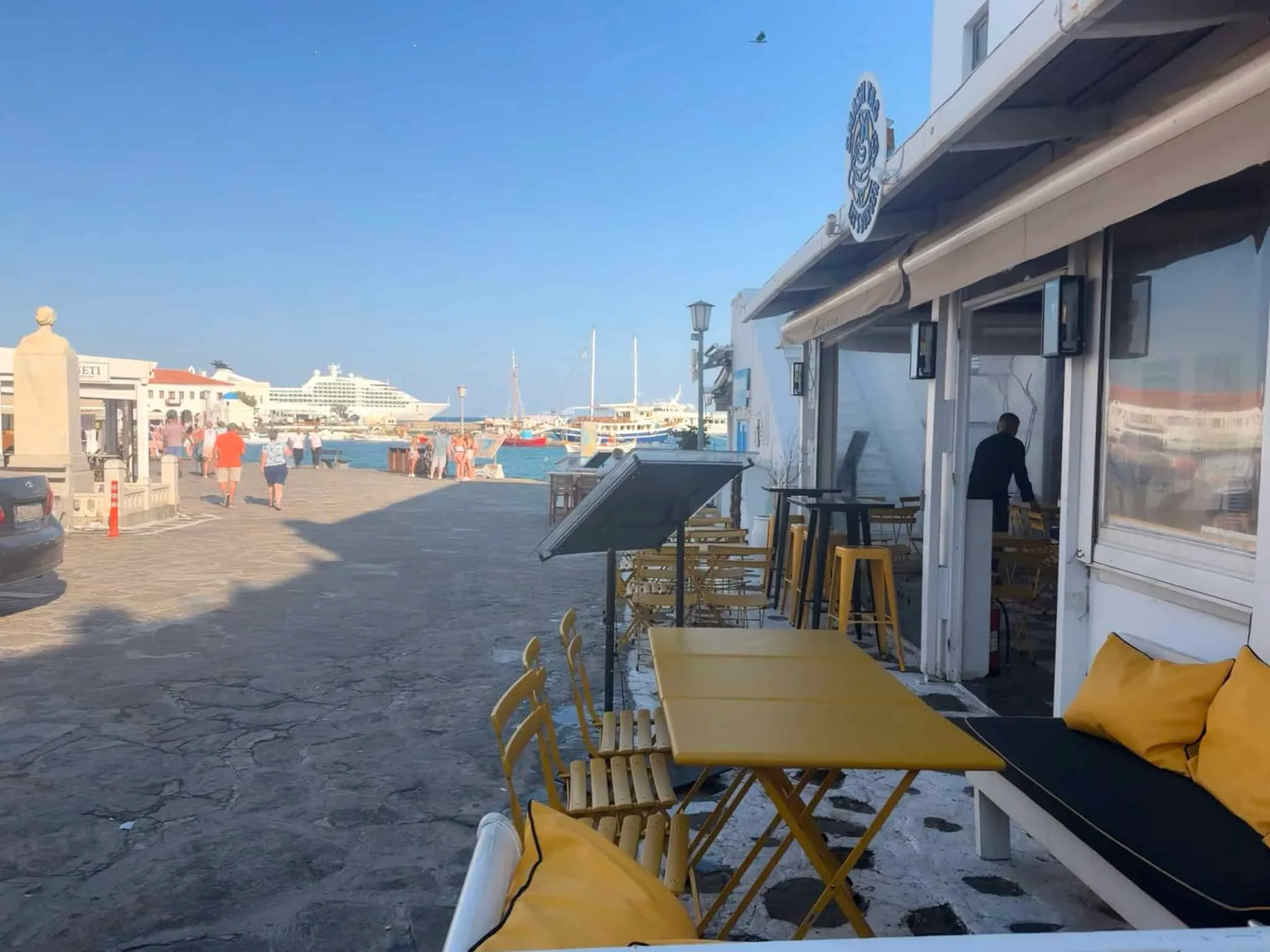
Antonio, our guide, was clearly knowledgeable, but what made him even better was how naturally he shared everything as we walked along, rather than reciting facts. Mykonos is full of little nooks and side streets, but here are a few sights and restaurants worth prioritising if you only have a short time on the island:
Sights to see:
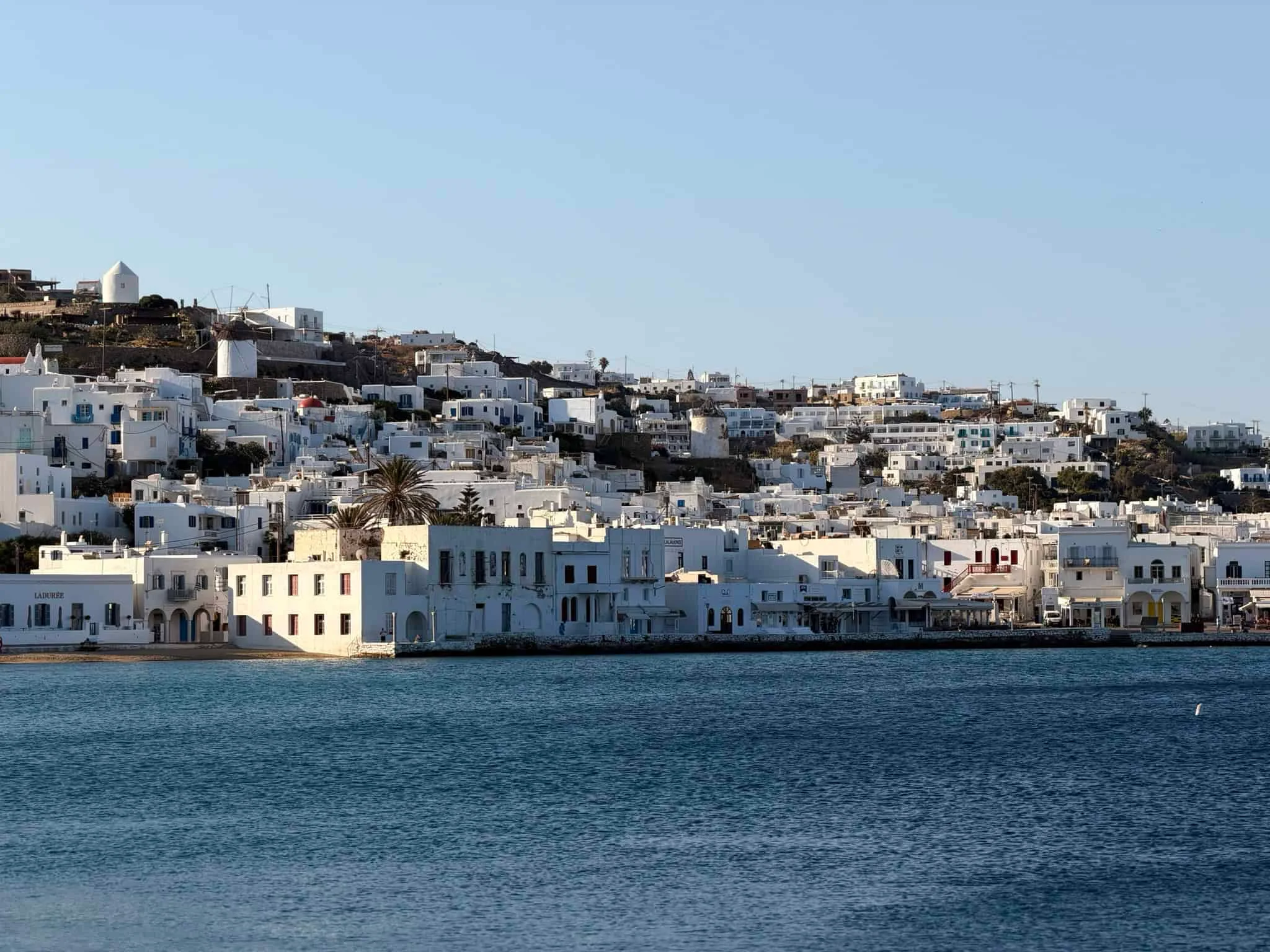
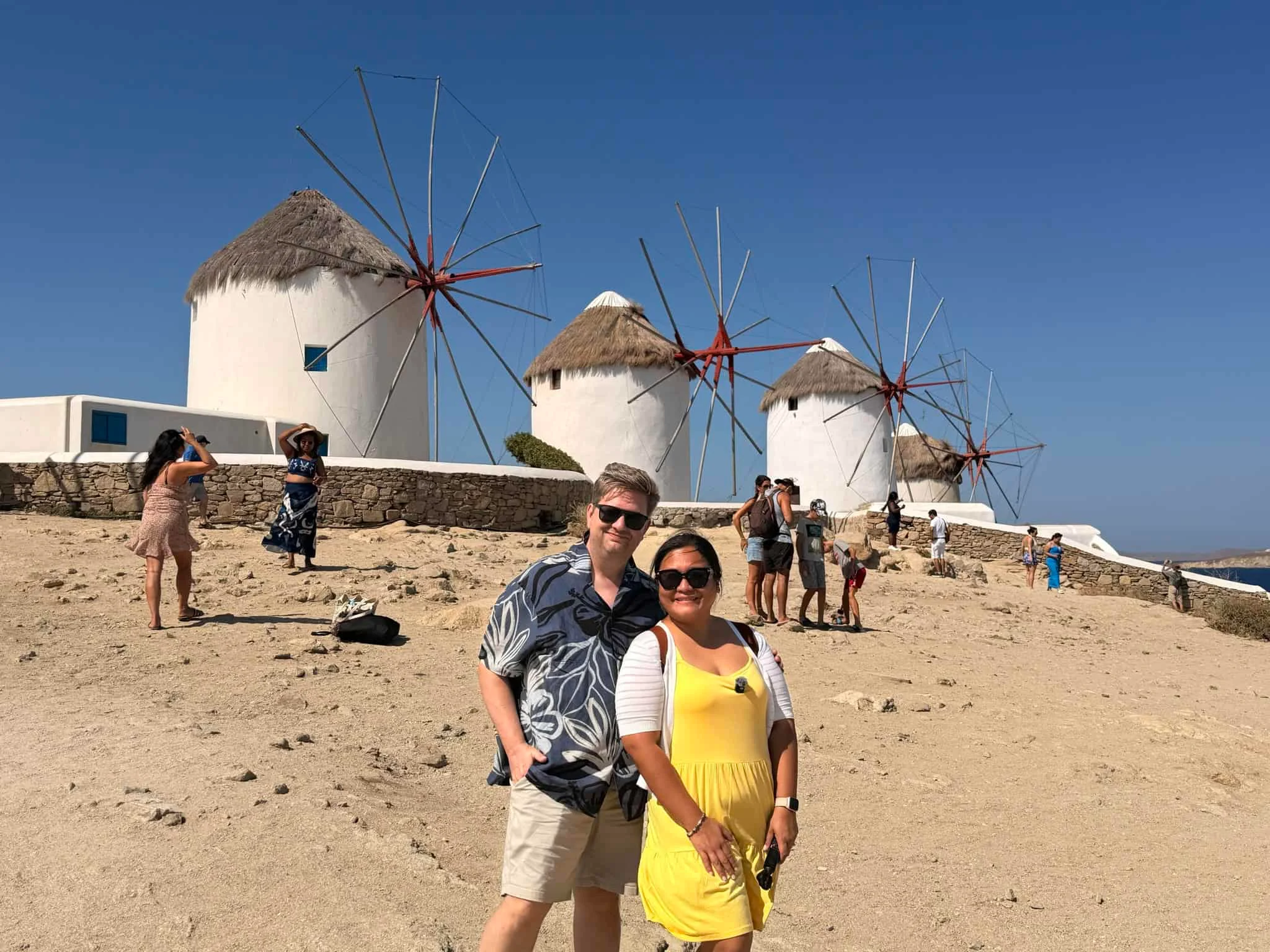
Kato Mili Windmills - arguably the iconic photo spot of Mykonos, a short walk from the town centre. These windmills were built in the 16th century to grind wheat and grain. They no longer function that way today, but they're preserved, some as small museums, others even as places to stay.
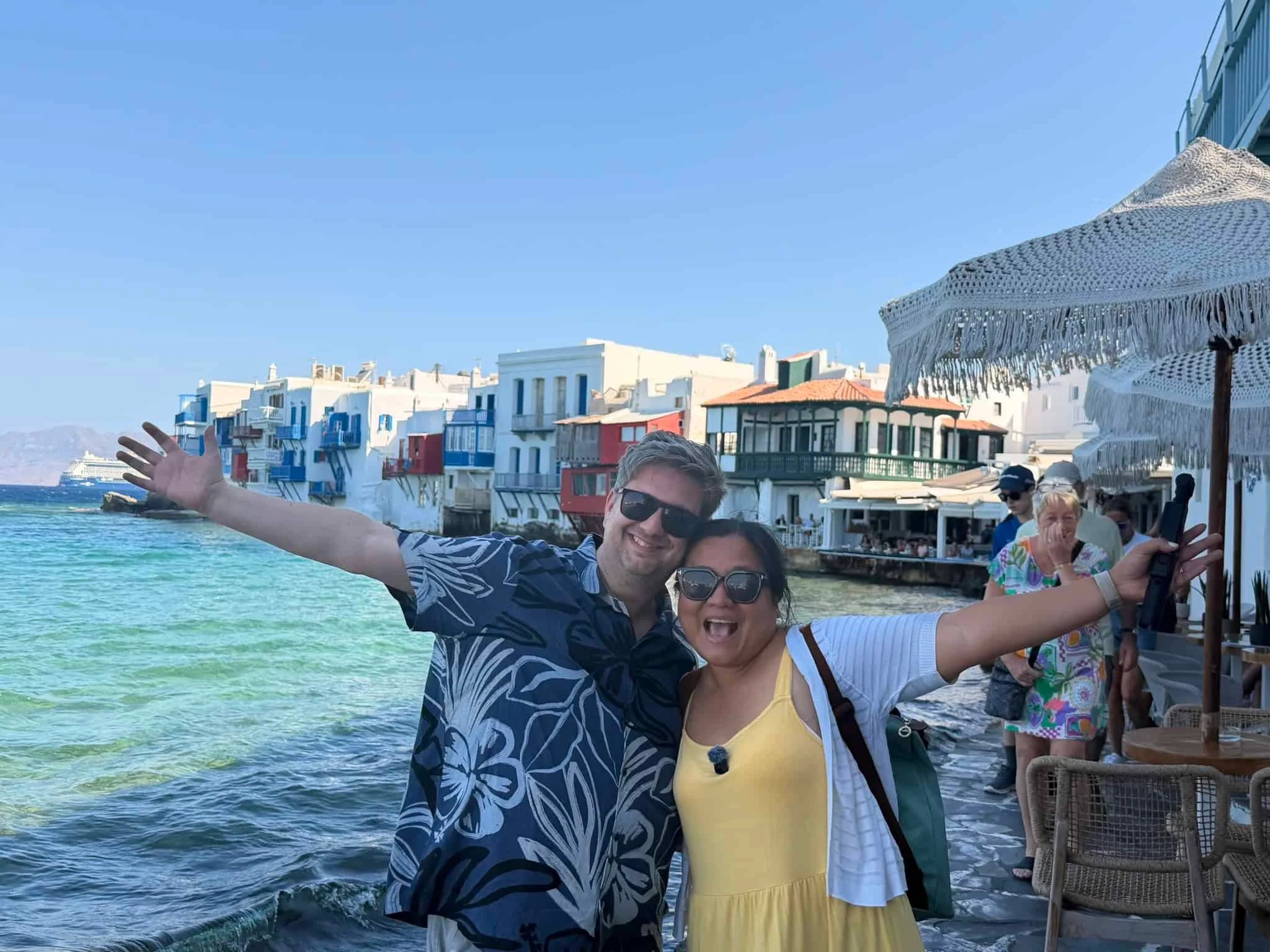
Little Venice - a small cluster of old captain's houses sitting directly on the water at the western edge of Mykonos old town. The buildings date back to the 18th century, and what sets the area apart is simple: the walls drop straight into the Aegean rather than facing it across a promenade or beach
Walking through, the narrow lanes suddenly open onto a low seawall, with tables from the waterfront bars perched right at the edge. It's one of the most photographed corners of the island, and once you're there, it's easy to see why people come back at the end of the day to watch the light fade off the water. It does get genuinely crowded in the evening hours.
Little Venice works best as part of a longer walk through Mykonos town rather than a standalone trip. It suits anyone who wants a drink by the water at sunset, though the crowds and prices that come with that reputation are worth factoring in before you settle at a table.
Panagia Paraportiani Church
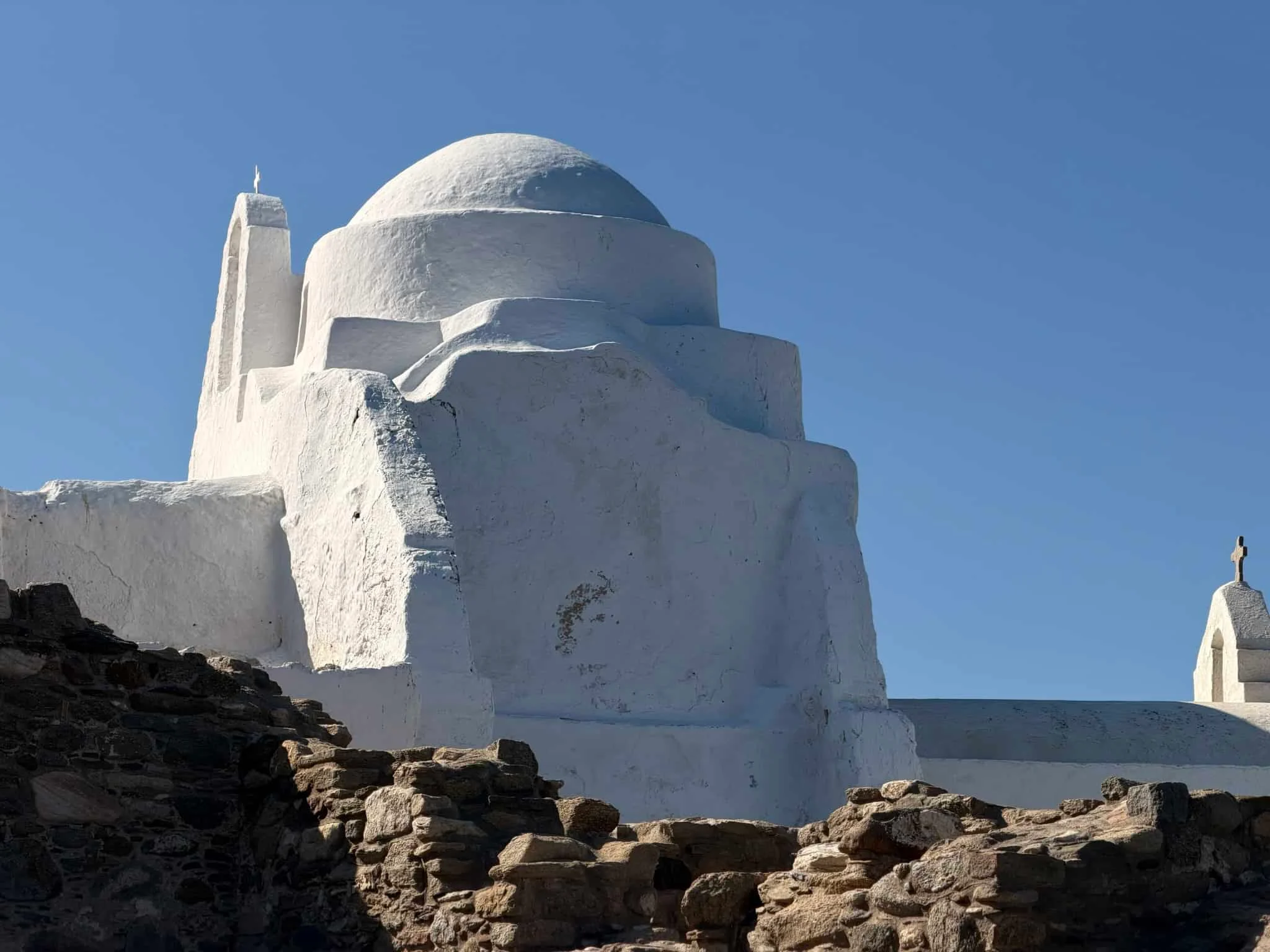
This whitewashed building is one of the most photographed buildings in the Greek islands. Completed in the 17th century, it's actually a complex of five separate chapels joined into a single organic mass, sitting at the edge of the Kastro quarter in Mykonos Town. Four chapels occupy ground level; the main chapel, dedicated to the Virgin Mary, sits on top.
There's no elaborate ornamentation on the exterior. The whole effect comes from the pure whitewashed surfaces and the way the irregular volumes cast shadows against each other as the light moves through the day. You walk around the building, take photos from different angles, and notice how the forms shift depending on where you stand.
The interior is generally closed to visitors, but the exterior grounds are open at all times with no ticket required. If you want to use the church for a wedding, a key keeper in a nearby village needs to be arranged in advance. The site fits naturally into a walk through Mykonos Town and works as an easy add-on alongside the Little Venice waterfront.
Local Food places:
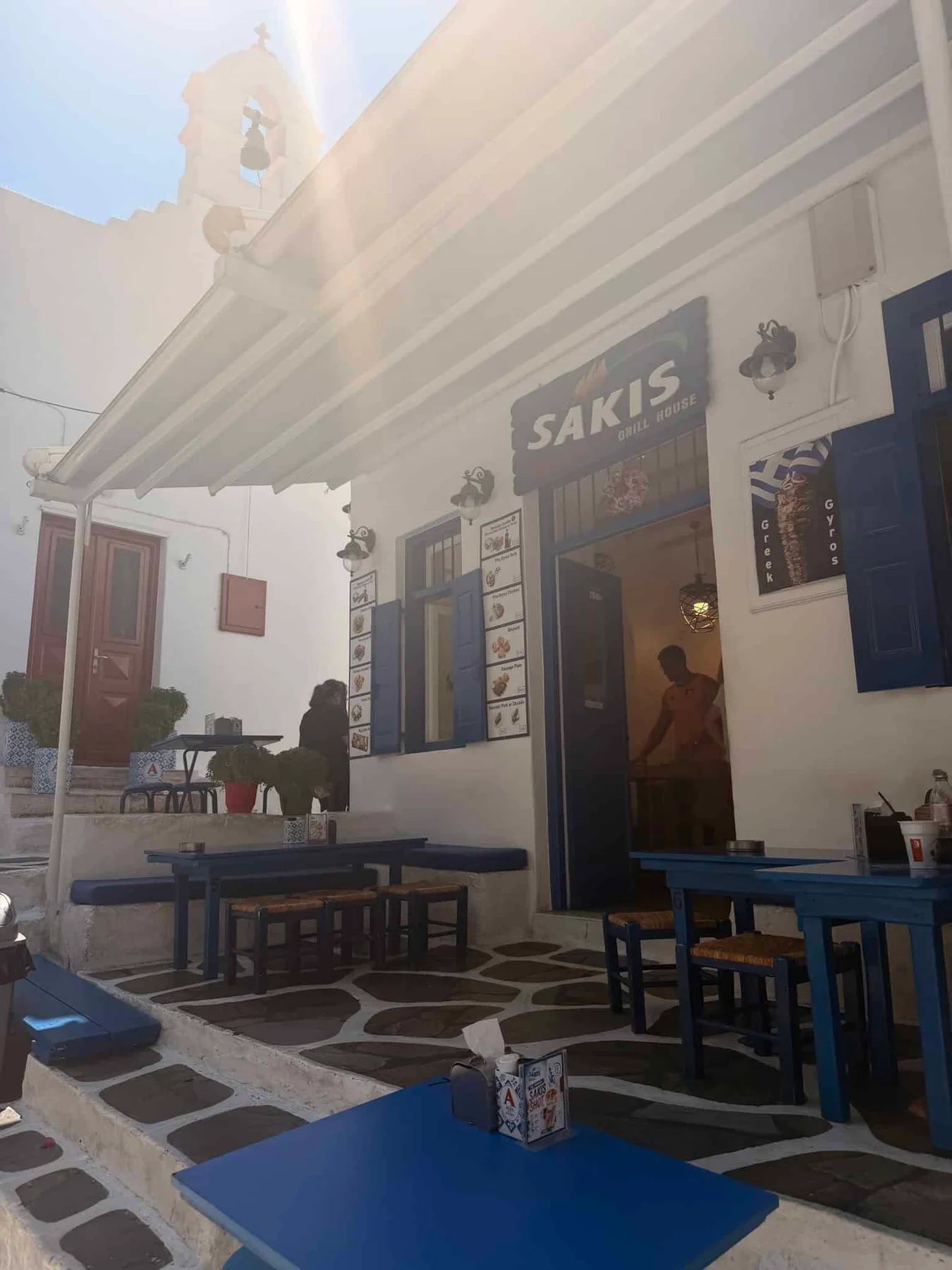
Sakis Grill House -a local, authentic, and affordable souvlaki house right in the centre of Mykonos.
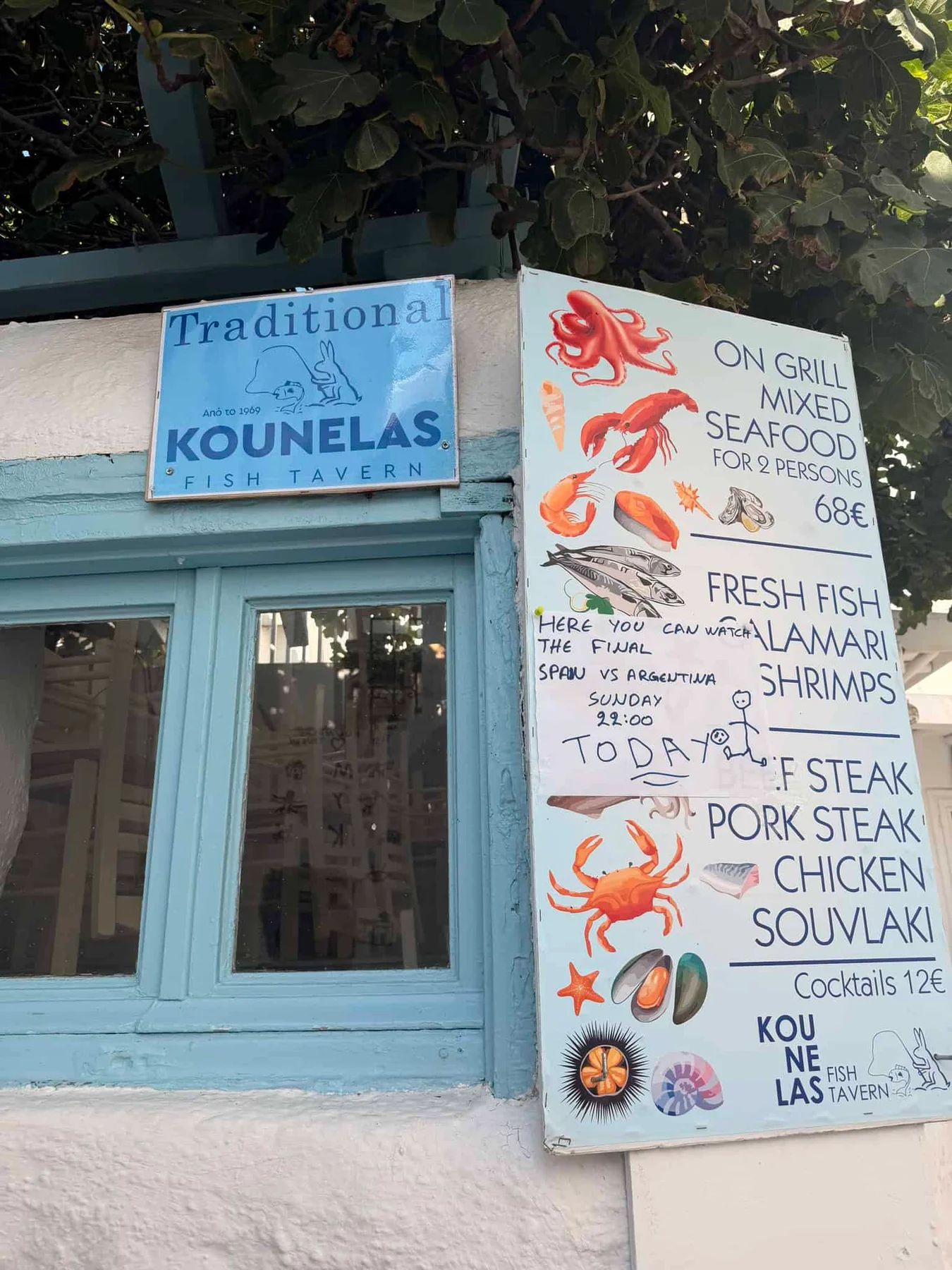
Kounelas Fish Tavern - a very local, authentic fish tavern, originally owned by a fisherman who loved sharing his catch with fellow fishermen. Generations later, the family still runs the place today. Simple but amazing, fresh seafood.
Gioras Wood Medieval Mykonian Bakery - operating since 1420, this traditional wood-fired bakery is still run today by descendants of the original owners.
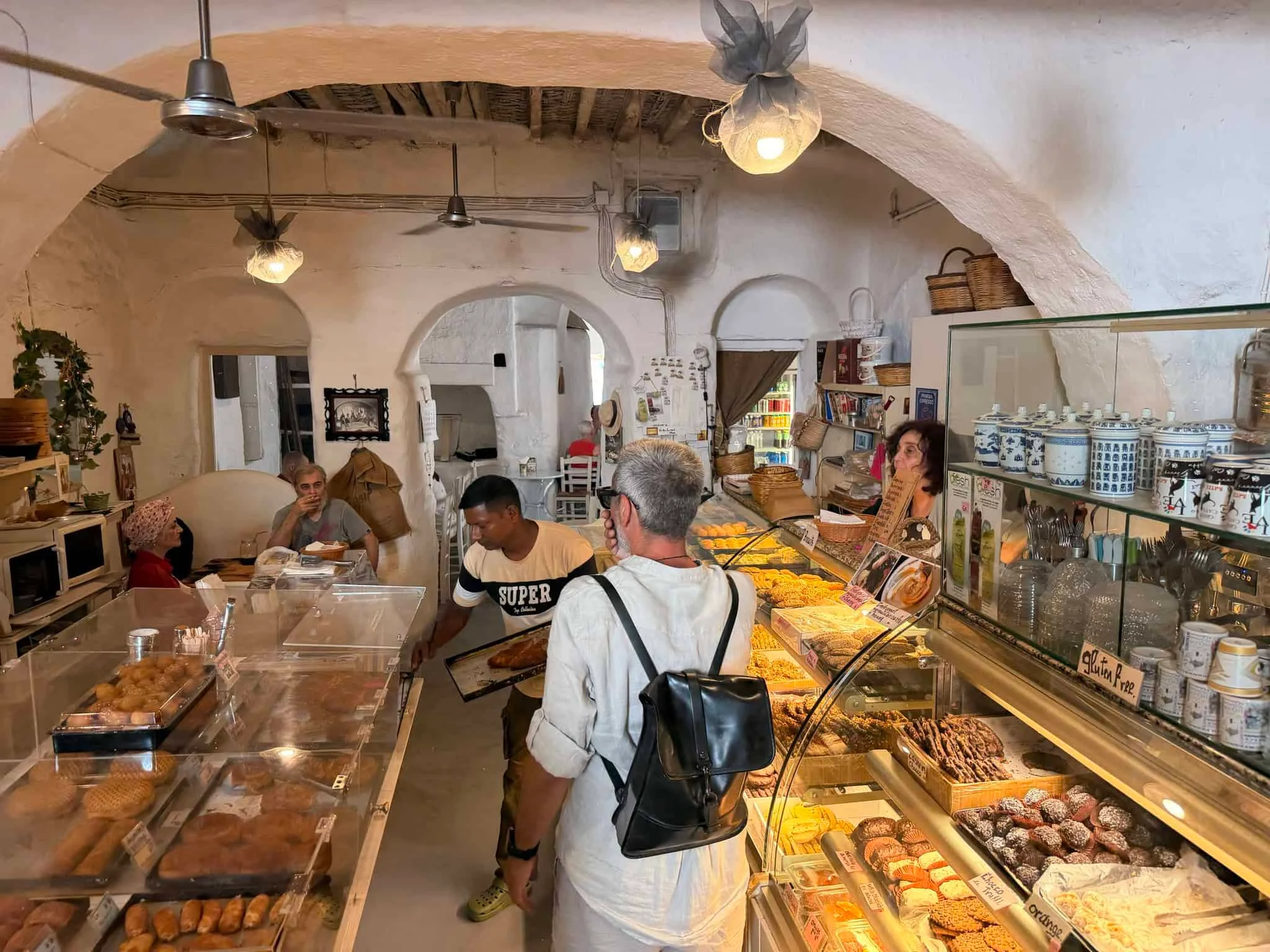
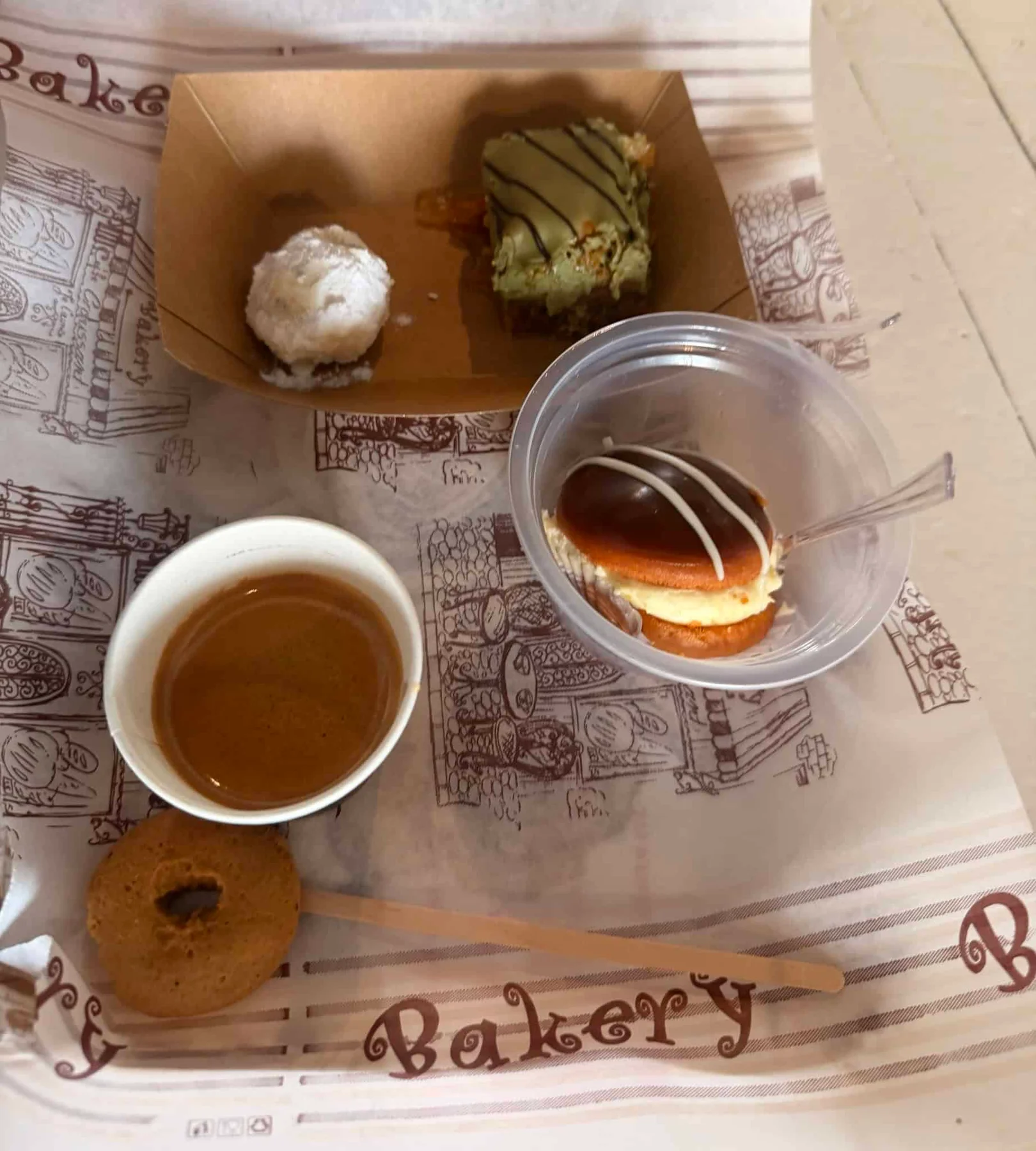
One thing worth saying: the best part of our day was our guide, who also happens to be the owner of the excursion company. Antonio was hands down amazing — from the communication before the tour to how he ran the day itself, we couldn't have asked for better.
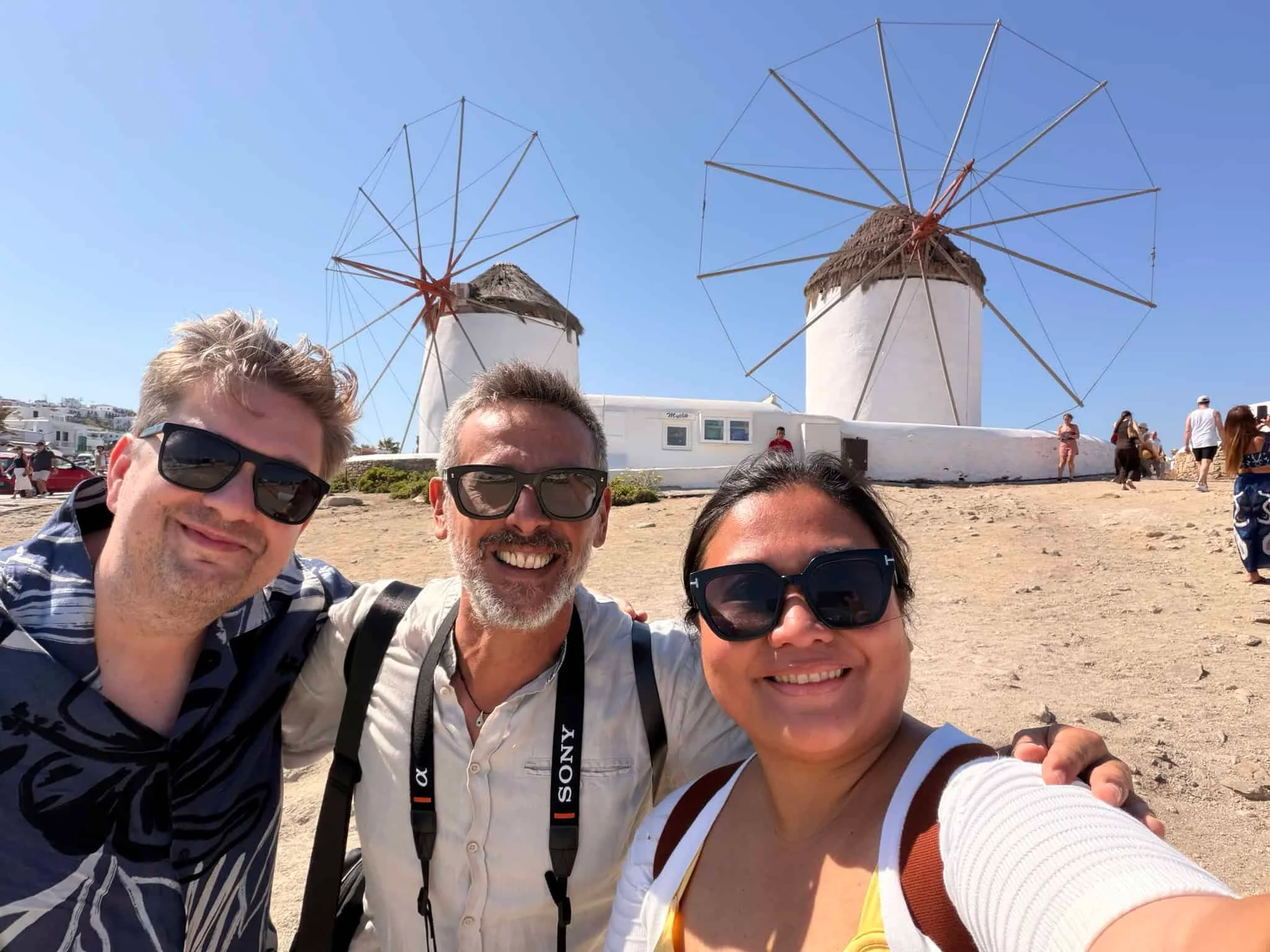
JAs the day went on, the crowds on the island kept building, so we decided to head back to the ship around noon. We took the sea bus back — 2.50 euros one way, less than a 10-minute ride to the New Port — then caught our tender back to the ship.
Looking back, our morning in Mykonos was over almost before it started, but it left us with a version of the island most people sail past without seeing. Between Antonio's easy way of sharing the island's history, the windmills and whitewashed chapels, and authentic food locals also love, we got both the postcard and the place behind it. If you only have a few hours in Mykonos before the day-trippers take over, that's exactly the balance worth chasing.